
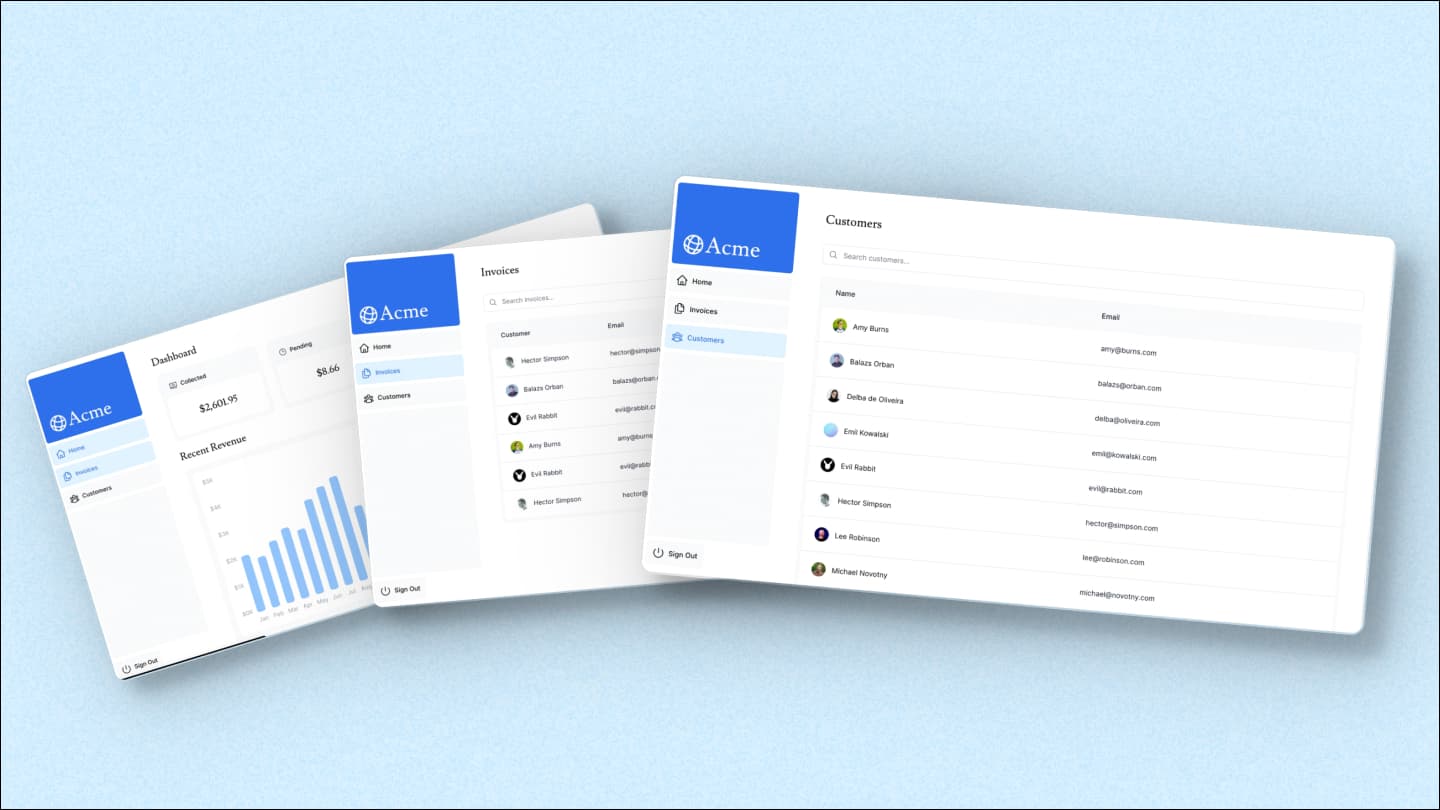

Overview
Key Features
🚀 Next.js 14 Rendering Showcase
- Server Components: Zero client-side JavaScript for most UI elements
- Streaming: Progressive rendering with Suspense boundaries
- Partial Prerendering: Static shell with dynamic content
- Parallel Routes: Simultaneous loading of different sections
- Intercepting Routes: Modal views without navigation disruption
📊 Financial Analytics Dashboard
- Real-time revenue tracking and financial forecasting
- Payment processing monitoring with anomaly detection alerts
- Client payment history and transaction flow visualization
- Custom date range filtering with instant financial reporting
📱 Responsive Design
- Fluid layout adapting to any screen size
- Mobile-optimized invoice creation flow
- Touch-friendly interface elements
- Dark/light mode with system preference detection
⚡ Performance Optimizations
- Route prefetching for instant navigation
- Image optimization with Next.js Image component
- Server Actions for form submissions
- Edge runtime deployment for global performance
Technologies Used
- Next.js 14: Leveraging the latest App Router, Server Components, and rendering optimizations
- React Server Components: For reduced bundle size and improved performance
- Tailwind CSS: For responsive, utility-first styling
- Drizzle ORM: Type-safe database queries with PostgreSQL
- Next Auth: Secure authentication with multiple providers
- Vercel: Edge deployment for global low-latency access
Rendering Implementation Details
Server Components & Streaming
// Dashboard layout with streaming components
export default function Dashboard() {
  return (
    <main>
      <header>
        <h1>InvoiceDash</h1>
        <UserNav />
      </header>

      {/* Static shell loads instantly */}
      <DashboardShell>
        {/* Data streams in progressively */}
        <Suspense fallback={<RevenueChartSkeleton />}>
          <RevenueChart />
        </Suspense>

        <div className="grid grid-cols-1 md:grid-cols-2 gap-4">
          <Suspense fallback={<InvoiceListSkeleton />}>
            <LatestInvoices />
          </Suspense>

          <Suspense fallback={<ClientsSkeleton />}>
            <TopClients />
          </Suspense>
        </div>
      </DashboardShell>
    </main>
  );
}
Partial Prerendering
// Static parts render at build time
export const dynamic = 'force-static';

// Dynamic parts use a Suspense boundary
export default function InvoiceList() {
  return (
    <>
      <StaticFilters />  {/* Prerendered */}
      <Suspense fallback={<InvoicesTableSkeleton />}>
        <InvoicesTable />  {/* Dynamically rendered */}
      </Suspense>
    </>
  );
}
Parallel Routes
// app/@stats/page.tsx and app/@invoices/page.tsx load in parallel
// within app/layout.tsx
export default function Layout({ stats, invoices, children }) {
  return (
    <div className="dashboard-layout">
      <aside>{stats}</aside>
      <main>{children}</main>
      <section>{invoices}</section>
    </div>
  );
}
Challenges and Learnings
Outcome
| Metric | Result |
|---|---|
| Time to First Byte | 100ms |
| Initial JS payload | 0KB (Server Components) |
| Bundle reduction | -60% vs client-rendered |
| Lighthouse Performance | 99/100 |
| Lighthouse Accessibility | 100/100 |
Want this level of performance for your project? Let's talk →
Tell me what's stealing hours from your team
A free 30-minute call, no sales pitch: we review your operation and I tell you whether I can help — and how.Book a call